

AiHello
AiHello is the only PPC tool to automate your ads from A-Z. This means that in addition to automated bidding, they also offer a complete campaign builder, an effective keyword management tool, and a dedicated account manager to help you with strategy and implementation.1
One of the most important features of AiHello is its completely automated campaign builder. Using this feature, sellers can create multiple campaigns at once for their ASINs without any keyword research. All you need to do is select which product you want to advertise, decide what your budget is and choose the campaign types you want set up for you and AiHello does the rest. This way, you can create campaigns in bulk and grow traffic and sales exponentially over time.1
Teikametrics2
Teikametrics is a software vendor and managed service provider for Amazon and Walmart sellers that need help with their PPC.
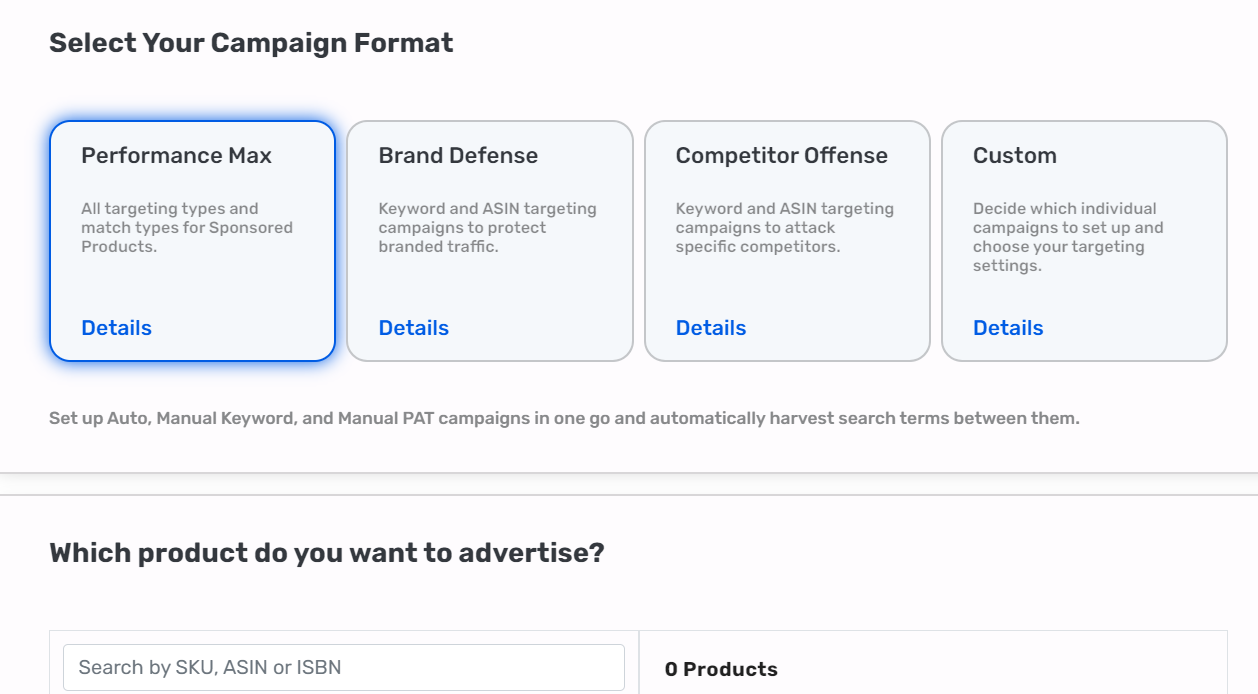
- Simplified Campaign Creator – Teikametrics can help you create new campaigns by pulling data from your current ones and your search term reports and using them as keywords. You can also use their campaign tool to create strategies like brand defense and competitor targeting for your account.
- Automated Harvesting and Negation – Automatically negate bad search terms to reduce wasted spend and add converting search terms from auto as keywords in your manual campaigns
- Automated ACoS Targets and Campaign Budgets – Spend the right amount on each campaign and product by automatically adjusting your ACoS targets and budgets through Teikametrics.
- Day Parting – Decrease spend during low performing hours/days with AI to decrease ACoS and sell more during peak times.
- Smart Bidding – Alongside the regular ACoS-focused bidding Teikametrics does, they also adjust your bids according to seasonality, inventory levels and product price to help you get the most out of your campaigns.

Pricing
- $199/month for up to $5k monthly ad spend.
- $499/month for up to $10k monthly ad spend.
- $499/month + 3% of ad spend for $10k+ monthly ad spend.
Budget Pacing: The Foundation of Controlled Scaling3
The biggest mistake sellers make when increasing budgets is assuming daily caps are enough. In reality, daily budgets don’t control when money is spent, only how much can be spent in total.
Without pacing, Amazon can exhaust your budget early in the day during poor-converting hours, leaving you invisible during peak buying windows. At scale, this creates unstable ACOS patterns that look random but are actually structural.
Proper budget pacing distributes spend intentionally across the day. It ensures your campaigns remain active during high-conversion periods while preventing early-day overspend from low-quality traffic.
In controlled scaling environments, pacing protects you from:
- • Budget burn during low-intent hours
- • Missing late-day conversion spikes
- • Overreacting to short-term CPC fluctuations
This is one of the first areas where automation consistently outperforms manual control, simply because humans cannot monitor spend hour by hour.
Guardrails: Scaling Without Gamble
Scaling breaks the moment limits disappear.
Sustainable & Established Brands: What Stable ACOS Actually Means4
For mature brands with consistent reviews, strong organic ranking, repeat customers, and predictable conversion patterns, ACOS typically settles into a more efficient range. Most established products stabilize around 25–50% ACOS, while TACoS generally remains under 15%, reflecting the combined effect of paid and organic sales.
This stability occurs because campaigns have already completed their initial learning and refinement cycle. Conversion rates improve as your listing gains trust, your keyword base becomes more focused, and your competitors fluctuate less dramatically.
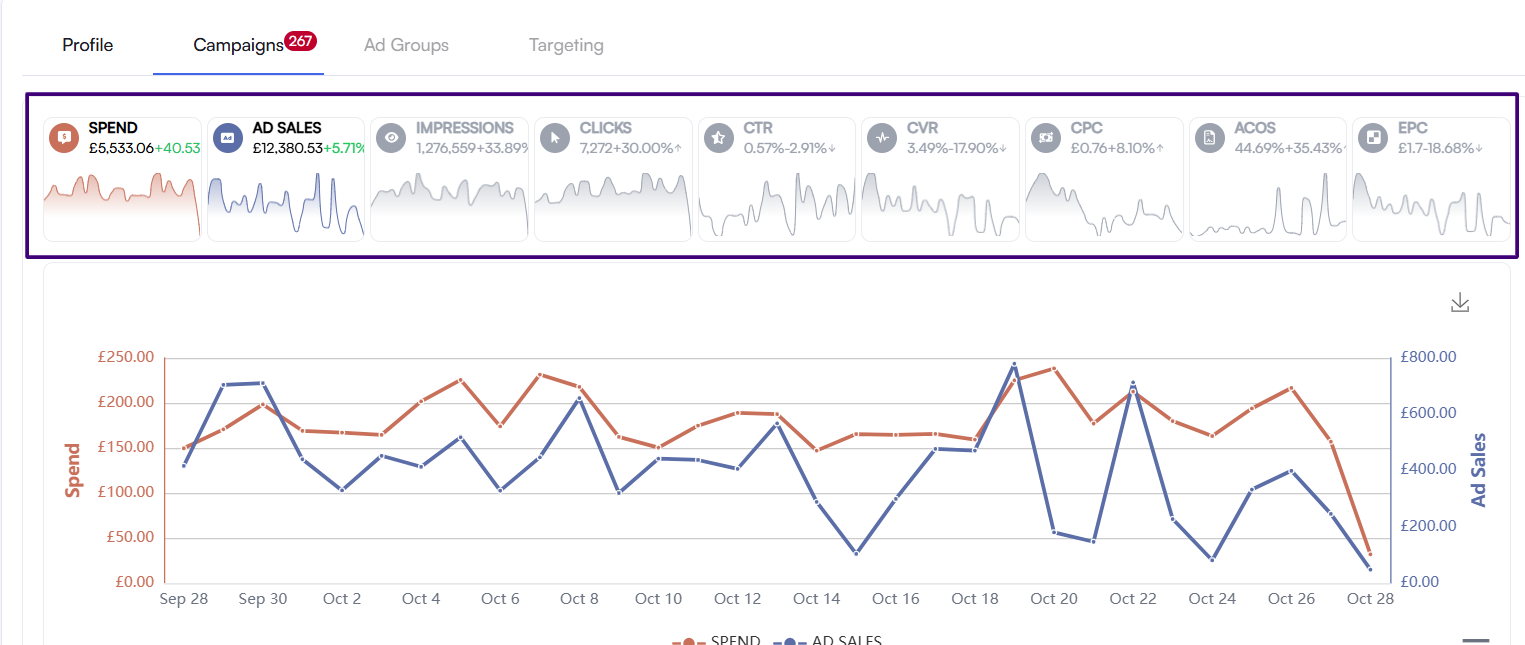
A key reason established brands enjoy stable ACOS is that campaign optimization compounds over time. As the account matures, irrelevant traffic gets filtered out, strong keywords rise, seasonality becomes predictable, and each dollar spent contributes more effectively to generating sales.
Performance at this stage is shaped by factors like pricing, competition level, the strength of your reviews, and seasonal demand.