



Most sellers underestimate how much time Amazon PPC truly consumes.1
Daily Budget Corrections1
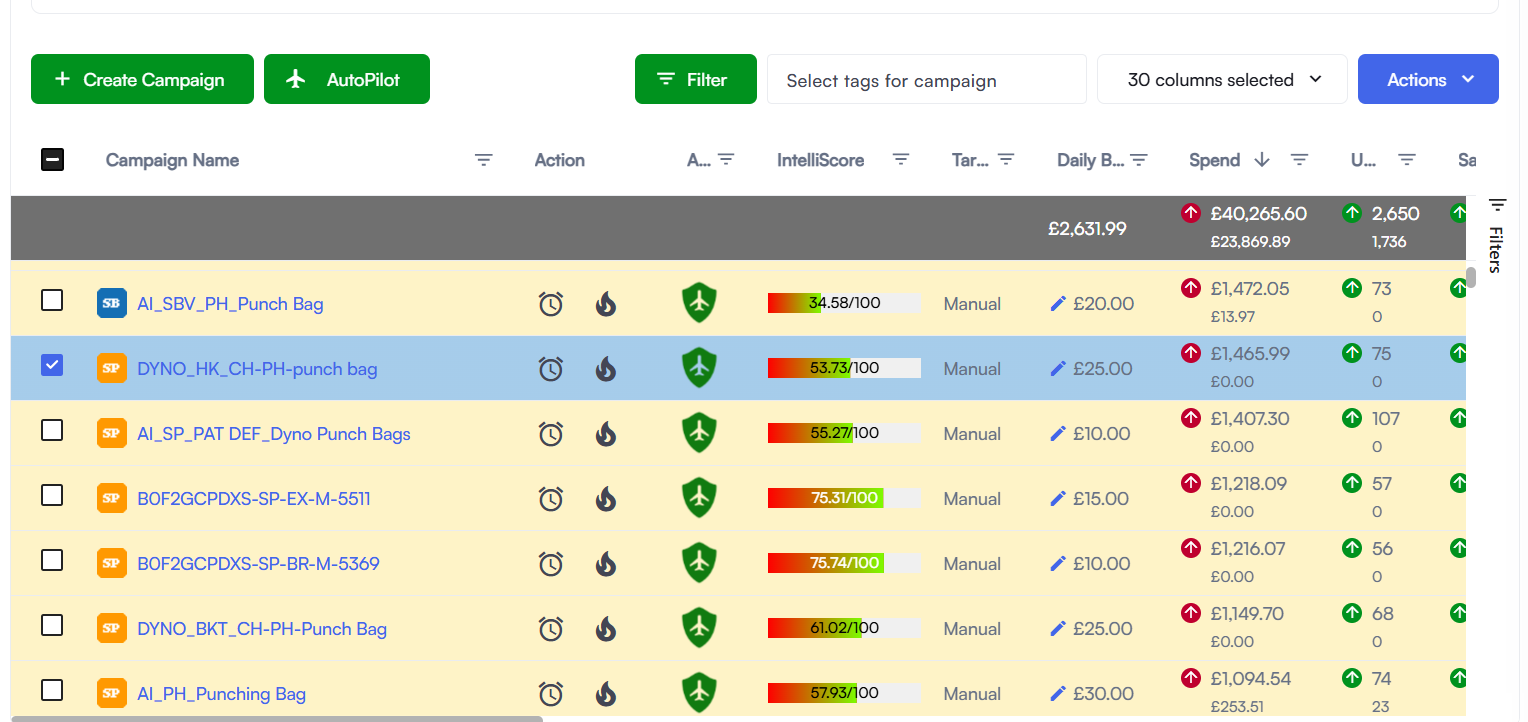
Budgets drain unpredictably. You often log in to raise a budget early in the morning or reduce it after a spike. AutoPilot manages pacing throughout the day, ensuring your best hours are funded without you constantly checking.
Search Term Mining
Manually analyzing search term reports consumes enormous time. Finding converting terms, promoting them, and isolating them into exact match is something automation can identify instantly based on performance signals.
Adding Negative Keywords
One of the most time-consuming tasks. Irrelevant queries slip in constantly, and humans often catch them only after significant spend. Automation blocks them early, sometimes after just one bad click.
Quality & Consistency Why Automation Outperforms Human Timing
The true advantage of automation isn’t speed. It’s timing.
Amazon ads don’t wait for you. CPCs spike after 8 p.m., profitable windows shrink, competitors go out of stock, and new ASINs enter the auction. If you check campaigns once a day or even three times a day you’re still at the mercy of the platform’s internal volatility.
Manual PPC is fundamentally reactive. You log in and fix what already happened.
AutoPilot flips the dynamic. Because it analyses performance continuously, it reacts while the trend is forming. If a keyword starts overspending, the system doesn’t wait until ₹500 is wasted. It reads early signals declining click-to-conversion ratio, sudden CPC rise, a drop in buy box and adjusts accordingly. For a human to match that responsiveness, you’d need to sit inside Seller Central all day.
The biggest source of missed opportunities for manual managers is off-hours behavior:
- • Conversions may spike late at night but budgets are exhausted.
- • CPC drops early in the morning but bids remain too low to enter auctions.
- • A profitable term appears in search terms but isn’t harvested until the next audit.
- • A seasonal keyword starts heating up but hasn’t been boosted in time.
Time Saved
Sellers typically save 20–30 hours per week. But the real win is cognitive relief. You no longer babysit bids, stress about bad ACOS spikes, or wake up to ruined budgets. This mental bandwidth can be redirected towards creative tasks that actually grow revenue launching new products, improving listings, optimizing pricing, or building external traffic funnels.
ACOS Stability & Efficiency
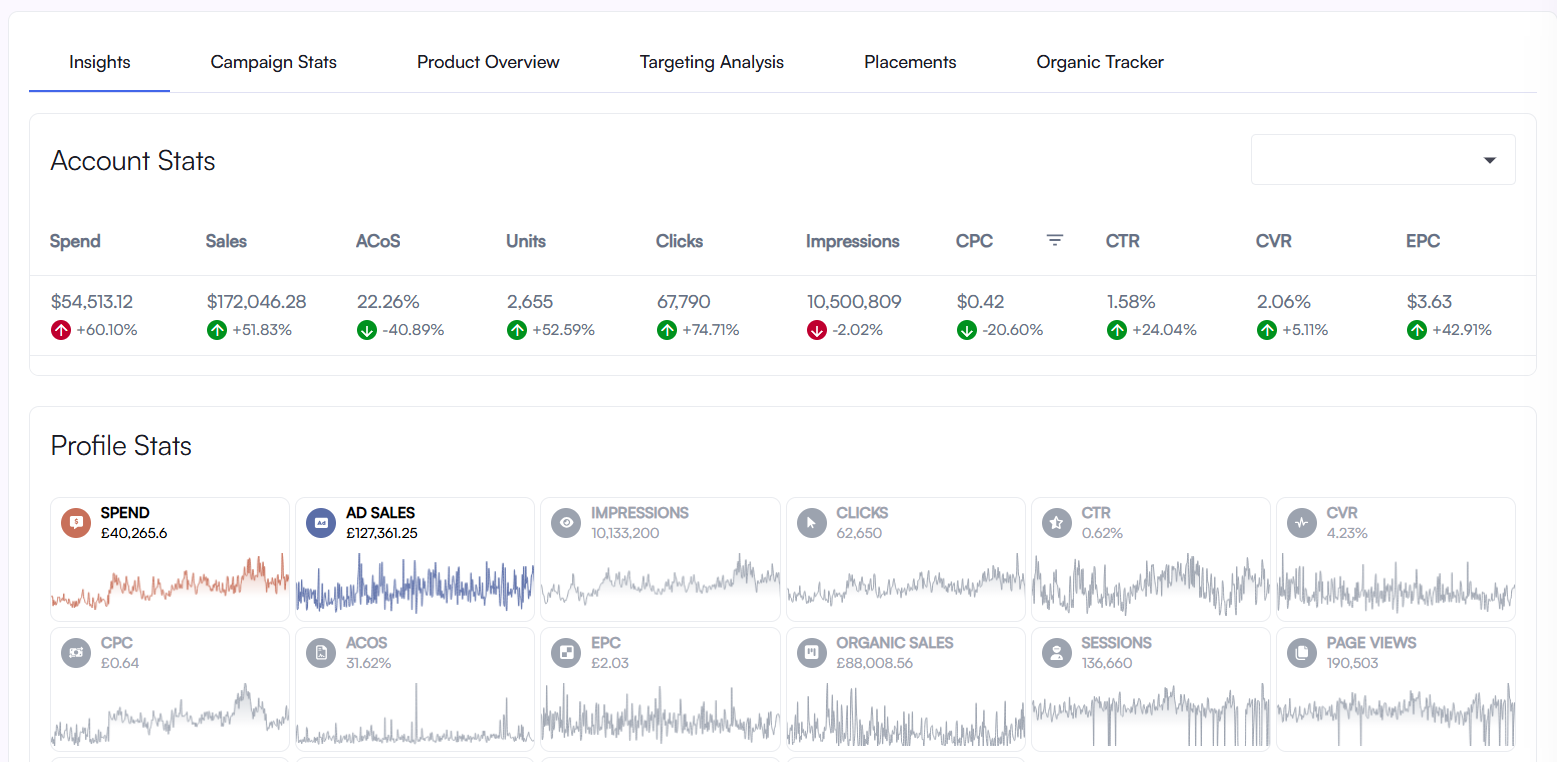
Automation doesn’t magically reduce ACOS. It reduces waste, which in turn lowers ACOS. The system keeps bids aligned to performance continuously, ensuring spikes don’t turn into disasters. Many sellers see ACOS tighten by 5–15% simply from eliminating overspend windows and capturing more profitable clicks that manual timing would have missed.
Revenue Lift Through Better Scaling
Manual scaling is cautious because humans fear loss. Automation scales with data, not emotions. When conversions rise, AutoPilot increases bids and placements strategically. When demand drops, it pulls back. This lets sellers scale spend profitably, not recklessly. Revenue often climbs because you’re actually eligible for the right auctions at the right time.
Risks & Safeguards2
Most sellers protect themselves using a few essential controls:
- Minimum and maximum bid limits These act as hard safety rails. They prevent your bids from dropping so low that you lose visibility or rising so high that costs explode.
- Daily spend caps Keeps your campaigns from burning through the budget during unexpected cost surges, especially during peak days or competitive spikes.
- Observation periods Automation waits for enough data before making major changes. This avoids reacting prematurely to a single bad day or a single high-cost click.
- Defined ACOS thresholds per product Each product behaves differently. Clear ACOS limits ensure the system knows when to stay aggressive and when to stay conservative.
With these in place, automation becomes steady, predictable, and far safer than manual trial-and-error. Instead of reacting emotionally to spikes, it operates with controlled precision, correcting issues without causing new ones.