
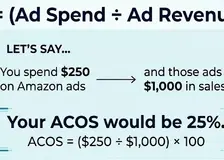
Top of Search typically has the highest click-through and conversion rates, but it also commands the highest CPCs, which can inflate ACOS if you pay for visibility without monitoring returns.1
Placement Boosts2
Amazon lets you increase your bids for any of its three placements to boost your chances of showing up on them.
Top of Search (First Page)
This refers to the first few sponsored ad placements at the top of search results.
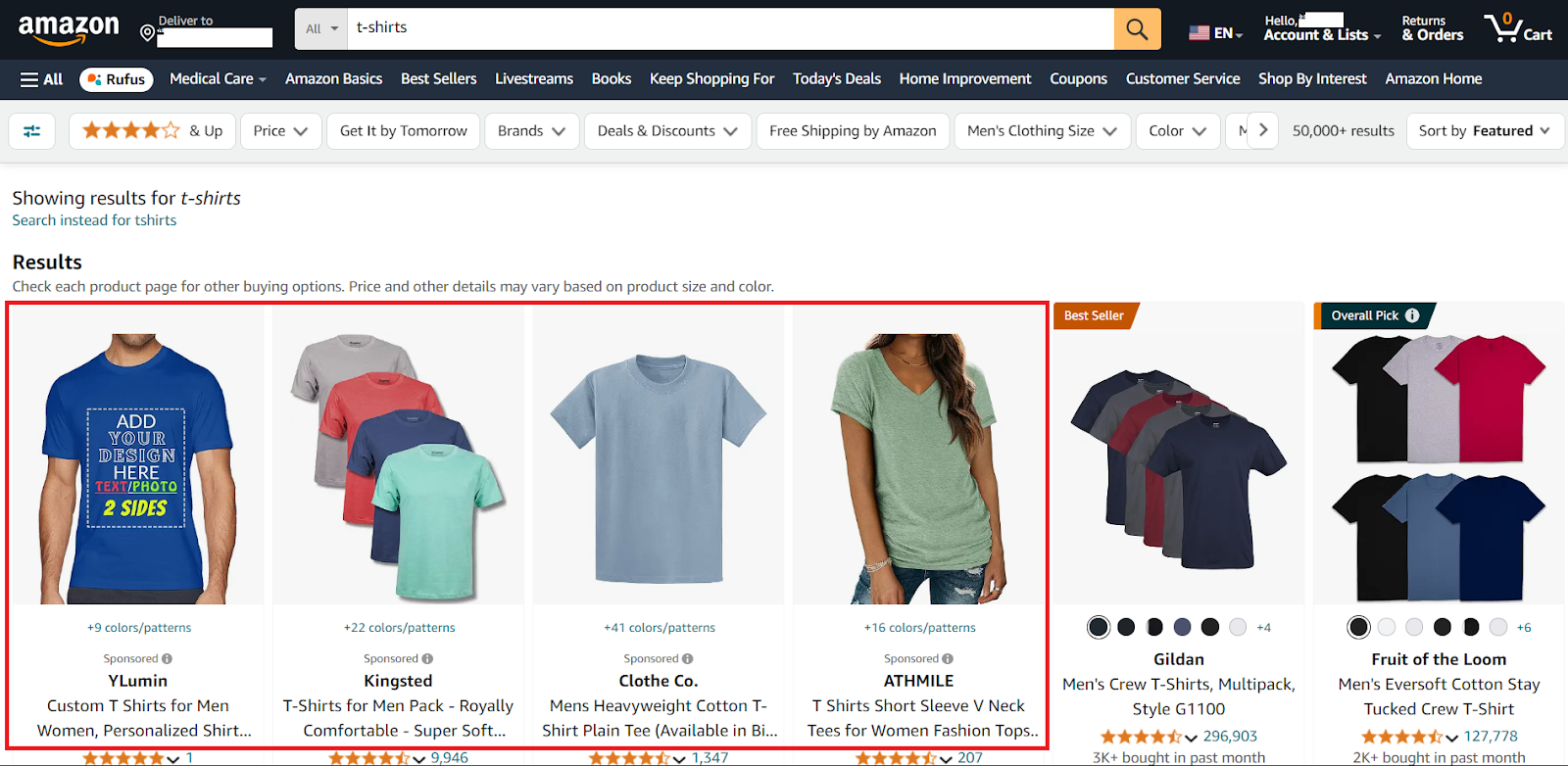
It’s a prime spot for visibility, and ads here often have higher click-through rates (CTR) and better chances of leading to a sale.
If you’re a new seller or looking to increase sales, consider boosting your bid for this placement by up to 50–100%. It can help you dominate search results, especially for high-traffic keywords.
Product Pages
Ads in this placement appear on product detail pages, offering exposure to customers browsing similar or related items.
Placement Aware Bidding: Top of Search vs Product Pages, When Boosts Pay1
The goal is not to push every placement equally, but to find where your combination of CPC and CVR produces the best profit per click.
Best practice is to pull placement reports and compare ACOS and ROAS separately for Top of Search, Product Pages, and Rest of Search, then tune multipliers accordingly. If Top of Search is delivering strong ROAS, you can justify multipliers of 50 per cent, 100 per cent, or more, while keeping base bids lower so you do not overspend on weaker placements. Conversely, if Product Pages show poor conversion and high ACOS, you can reduce the multiplier or set it to zero to avoid cannibalising spend.
Some brands even split structures into search-focused and product page-focused campaigns, using high multipliers on the winning placement and zero multipliers elsewhere for clean control.
AiHello AutoPilot integrates with Amazon’s placement controls and can adjust bids in a way that reflects performance by placement instead of treating all impressions the same. Using AiHello, you can lean into a “placement matrix” mindset: high CVR and acceptable CPC earns a boost, low CVR or bloated CPC earns a cut. Over time, this placement-aware bidding compounds efficiency, pushing more of your budget into the placements that actually lower ACOS instead of just increasing visibility.
Automated Placement Boost3
Amazon allows advertisers to adjust bids for different ad placements like Top of Search, Product Pages, and Rest of Search. These placements perform very differently, and the top of search usually brings in the highest conversions. But manually adjusting placement settings across multiple campaigns can be time-consuming and risky.
That’s where Automated Placement Boost in AiHello AutoPilot comes in.
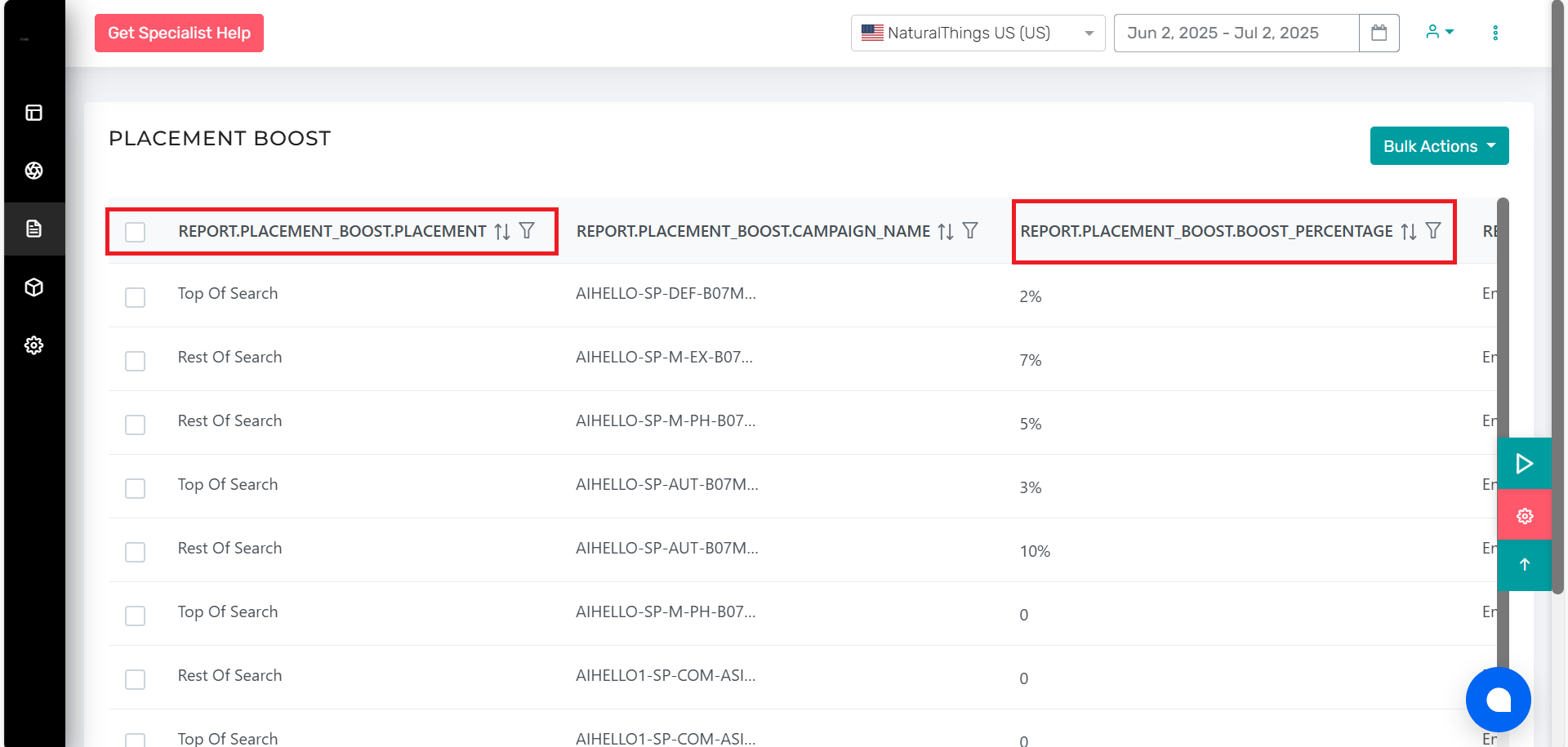
When enabled in AutoPilot settings, this feature automatically increases or decreases placement bid adjustments based on real-time performance. If a placement (like Top of Search) consistently drives strong sales and a low ACoS, AutoPilot will increase the boost for that placement to get more visibility. On the flip side, if a placement performs poorly high spend, low returns it will reduce the boost or eliminate it entirely.
This automated control ensures that your ad budget is focused on the placements that actually convert, while avoiding overspending on those that don’t. And since this optimization happens daily, your bids stay aligned with current performance trends no need to monitor and adjust manually.
Placement Playbooks4
Agencies deploy playbook-driven placement strategies, boosting Top of Search (TOS) for converters while capping Rest of Search (ROS) for low-CVR spots. Placement reports dictate adjustments: +20-50% TOS boosts for <20% ACoS, zero/minus bids on underperformers. Competitor analysis refines this cross-channel.
Dynamic rules intra-day via data streams ensure spend flows to high-value spots like product pages during peaks.
AiHello’s bid engine executes these playbooks via real-time adjustments: automatically allocate to top placements, with velocity controls for aggressive TOS scaling during trends.