Sponsored Products usually drive direct sales, while Sponsored Brands, Sponsored Display are more about getting your brand in front of new people.1
Sponsored Products2
SP ads display your product listings in search results and product detail pages. They are perfect for driving targeted traffic to your products.
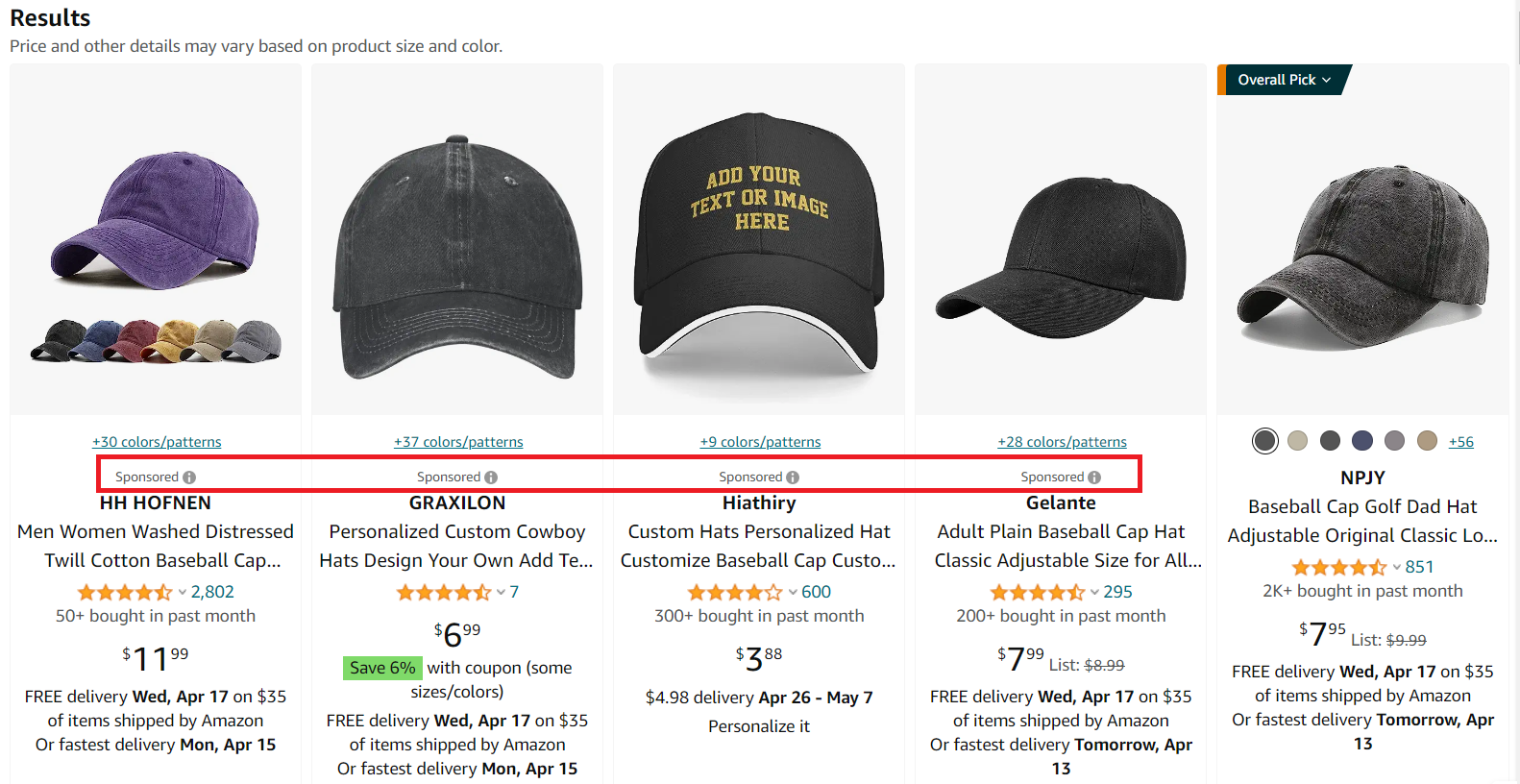
You should allocate around 80% of your total budget to SP because it offers the highest ROI and can be easily scaled compared to other ad types.
Sponsored Brands
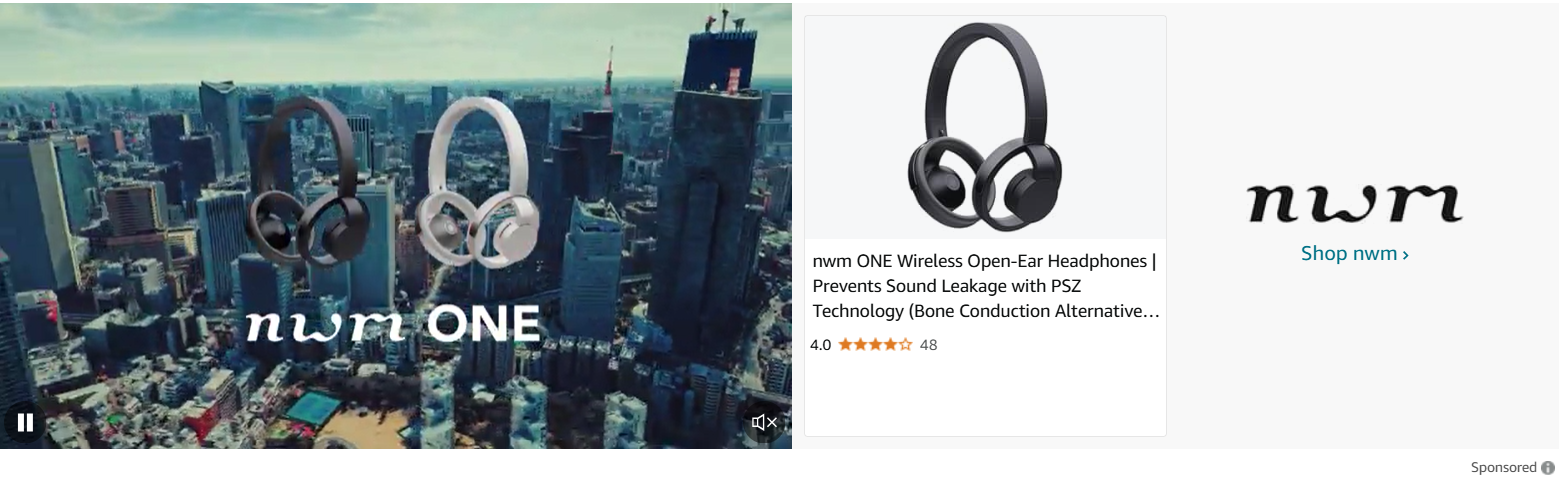
SB ads are banner-style ads that showcase your logo, a custom headline, and multiple products.
Unlike SP ads, sellers only spend a small fraction of their ad budget on SB, usually 13% because they are more expensive and yield a lower ROAS.
You should begin using SB ads after seeing reasonable ROI from SP ads.
Sponsored Display
SD ads share similarities with both SP and SB ads. They feature only one product like SP but you can customize the image displayed and add a custom headline like SB.
One unique feature of SD ads is that they allow you to reach potential customers who have previously interacted with your brand or similar products on Amazon or other websites.
Spread Your Budget Across the Whole Funnel1
If your upper-funnel campaigns show a higher ACOS, don’t panic and judge them the same way you’d judge a bottom-funnel campaign.
They’re doing a different job, building awareness, reaching new-to-brand customers, so measure them that way. Give each campaign the budget and the success metric that actually fits its role, and your account ends up healthier overall.
How to Build a Full Funnel Strategy with DSP and Sponsored Display Ads3
While they serve different purposes, the most successful brands on Amazon know how to leverage both DSP and Sponsored Display ads to cover the entire customer journey.
Here’s how that can look in a simple funnel:
Top of Funnel (Awareness) - Amazon DSP Only
Target new audiences who don’t know your brand yet using:
- Lifestyle and demographic segments
- Lookalike audiences
- Contextual targeting on third-party websites
Mid Funnel (Consideration) - DSP & Sponsored Display
Now that shoppers have seen your brand:
- Retarget them with DSP as they browse other sites
- Keep your brand top of mind (on Amazon search results and detail pages) with Sponsored Display
Bottom of Funnel (Conversion) - Use Sponsored Display
This is for when the shopper is looking to buy. Here’s what to do:
- Defend your product pages from competitor ads by running yours
- Run product/category targeting to appear on similar listings
- Re-engage cart abandoners
Budget Optimization4
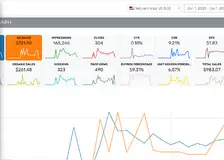
This Amazon PPC optimization strategy ensures that high-performing campaigns don’t go out of budget, potentially increasing sales by 5-7 figures at the same ACoS.
Here’s how to use it:
Go into the budgets tab.
Filter campaigns by ACoS (less than the account average) to see if you have low ACoS campaigns that are running out of budget.
If you do, increase their budget by at least 50%. This can be done as a bulk action in 2 clicks.
Also, filter by sales to see if your top-selling campaigns are running out of budget.
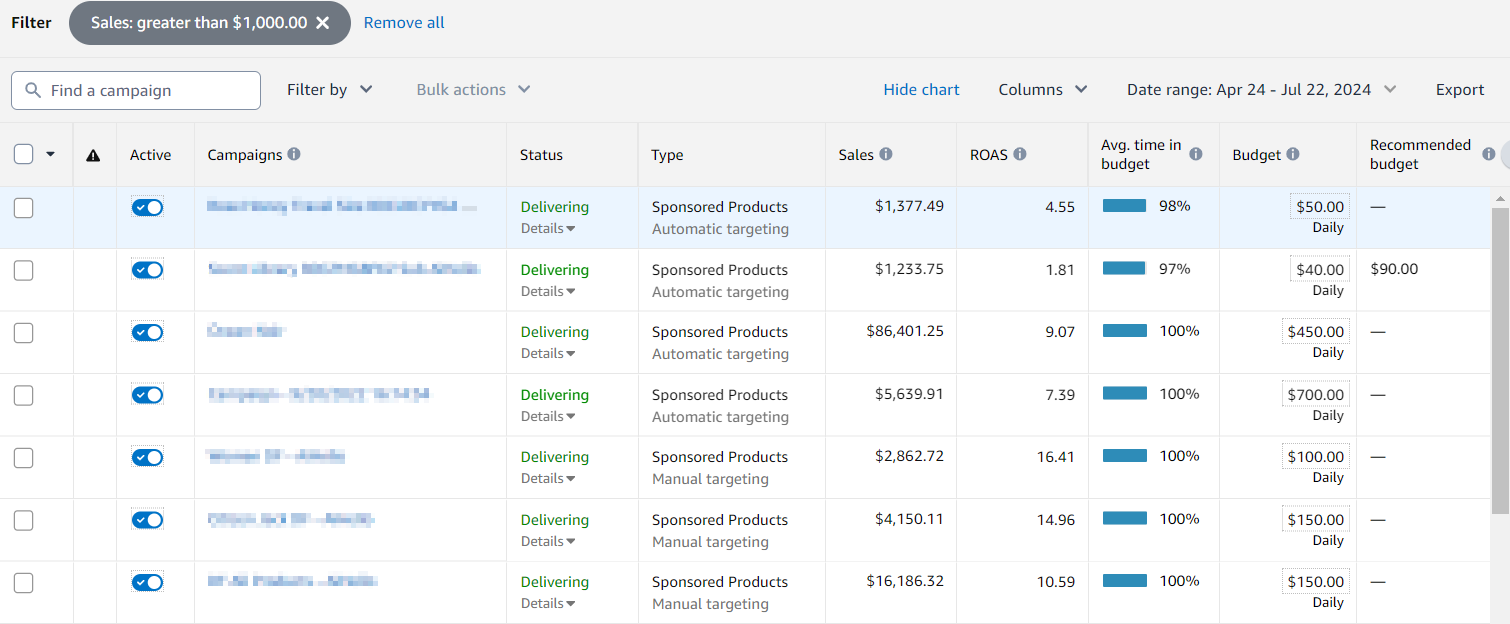
If they are, adjust their budgets too.
Smart, adaptive pacing5
Budgets and bids dynamically shift up or down based on detected demand, not on arbitrary, outdated pacing tables.
The Spend Hierarchy: Brand Defense vs. Competitor Offense
Strategic spending means knowing that not all ad dollars are worth the same. Your hierarchy:
- Defend: Secure your branded searches, don’t let competitors snipe your own customers.
- Protect: Lock down your own product pages from competitor ads.
- Expand: Conquest unbranded terms and competitor keywords.
Value-based allocation
- Brand defence typically converts cheapest, but every extra dollar may add less incremental value the law of diminishing returns.
- Competitor conquests carry a higher risk but offer big share-shift upside.
- Smart model: Allocate 40% of spend to branded defence, 40% to high-value non-brand/generic, and 20% to pure competitor conquest. Dial the ratios to fit your margins and risk tolerance (start 50/35/15 for new brands; shift aggressively as you scale).